The Land Is Our Amenity — The Architecture of Distance
What Australia's Rural Buildings Can Teach Us About the Future of Luxury Hospitality
By Christine McKanna-Farr
Continuing my series The Land Is Our Amenity, I found myself travelling further inland recently, heading to Merriwa in the Upper Hunter Valley for our daughter's Jamboree. As the kilometres unfolded, so did the landscape, revealing another dimension of regional Australia that continues to capture my imagination.
There is something quite remarkable about distance. As we move further away from our first- and second-tier cities, the landscape opens, the horizon extends and the journey itself becomes part of the experience. Distance provides an opportunity for reflection, a gradual transition from the intensity of urban life into the slower rhythms of established agricultural communities.
These towns carry generations of history, built upon pastoral industries, agriculture and enduring family enterprises. Their economies and identities have evolved through an intimate relationship with the land, and their built environments reflect that history.
Having spent much of my career working within the architectural landscapes of Shanghai, Beijing, Singapore and the Middle East, I now find myself equally captivated by the modest rural structures scattered across the Upper Hunter Valley. Travelling between properties, I am constantly observing opportunities for master planning, adaptive reuse and placemaking, particularly where existing buildings offer a foundation for new economic and cultural activity.
What draws me in are the small colonial-era cottages, workers' dwellings and agricultural outbuildings that have endured for more than a century. Some are exhausted, weathered by generations of occupation and seasonal extremes, yet their architectural integrity remains remarkably compelling. I often find myself wanting to knock on the door and ask whether the owner might consider parting with one.
Their simplicity is extraordinary.
Gabled roofs, deep verandas, substantial timber posts and beams, fireplaces constructed from locally available stone and carefully considered positions within the landscape. These were buildings shaped by necessity, designed to provide shelter, accommodate daily life and maintain a direct relationship with the surrounding agricultural environment.
Their siting was rarely accidental. Orientation, cross-ventilation, shade, access to water and visibility across working properties informed decisions that remain relevant to contemporary regional design. The veranda provided an important transitional space between interior and landscape, while the fireplace anchored the dwelling through the colder months.
There is a sincerity to this architecture that I find increasingly absent from contemporary discussions about luxury.
Perhaps the most relevant architectural blueprint for the future of regional hospitality is already standing in our paddocks.
This observation has begun to influence my thinking around the next Boutique Builds collection. Rather than searching for an entirely new architectural language, I am interested in revisiting the enduring principles of Australia's rural buildings and interpreting them through contemporary construction, materiality and hospitality requirements.
The gabled pavilion, the veranda, the fireplace and the relationship between internal occupation and external landscape are not new ideas. Their longevity is precisely what makes them valuable.
Reclaimed Australian hardwoods, carefully selected local stone and traditional timber treatments offer opportunities to introduce texture, permanence and a sense of regional identity. Locally sourced stone, stacked to form fireplaces and architectural elements, provides another connection to the landscape, giving a small building a sense of permanence and grounding.
These are materials that carry character and respond to time. Their imperfections, patina and ageing become part of the architectural experience.
As hospitality developers increasingly consider modular and repeatable accommodation, I find myself returning to a fundamental question: how do we ensure that a commercially efficient building system still creates an authentic experience of place?
The ability to procure and install multiple accommodation modules is commercially attractive. Standardisation can provide greater certainty around documentation, construction and delivery, particularly in remote locations. Yet the architecture must still respond to the landscape, the history of the property and the cultural identity of the region.
A luxury villa should be more than an accommodation unit positioned within an attractive setting. Its value lies in the relationship between the architecture and the environment it allows the guest to experience. And this brings me back to the economics of space. The further inland I travel, the more aware I become of the acoustic qualities of the landscape. The absence of urban noise, the movement of wind through trees, distant livestock, birdlife and the remarkable stillness that settles across agricultural properties at different times of day.
Silence, privacy and distance are becoming increasingly valuable components of luxury hospitality.
These qualities cannot be manufactured through interior design or replicated through an international brand identity. They already exist within the landscape, waiting to be thoughtfully incorporated into the guest experience.
Conservation-led tourism, ecological experiences, agricultural activities and adaptive reuse can provide meaningful reasons for travellers to venture beyond established tourism destinations. The journey becomes part of the narrative, connecting guests with the history, resilience and ongoing stewardship of regional Australia.
There is also a significant opportunity for these developments to introduce new economic activity into generational agricultural towns. Boutique hospitality can create demand for local trades, producers, craftspeople, guides and service providers, provided the development model genuinely engages with the surrounding community.
Having worked on substantial hospitality and mixed-use developments internationally, I remain fascinated by the architectural ambition of the world's great cities. The remarkable buildings of Shanghai, Beijing and Dubai have shaped much of my professional experience. Yet living in the Hunter Valley has brought me full circle.
I find myself increasingly drawn to the smallness of architecture, the authenticity of materials and the lasting impression created by buildings that understand their place within the landscape. For Boutique Builds, this is becoming an important direction for our next collection: architecture informed by the modest rural pavilion, interpreted for contemporary hospitality and capable of adapting to different regional settings without losing its connection to place.
Regional knowledge is not acquired through a brief site visit. It develops through years of observing seasonal changes, understanding local materials, engaging with communities and recognising the subtle characteristics that make one landscape entirely different from another. I see extraordinary potential throughout the Upper Hunter Valley and further inland for thoughtful hospitality development, adaptive reuse and master planning that introduces new economic opportunities while respecting the agricultural histories that have shaped these communities.
Perhaps one day an international hospitality brand will recognise the same potential and invite a locally based design practice to help realise it.
I would welcome that conversation. After all, I am already here, travelling these roads, observing these buildings and imagining what they might become.
The architecture does not need to compete with the landscape. It needs to understand why the landscape matters.
And perhaps the greatest luxury of all is the distance we travel to rediscover that relationship.
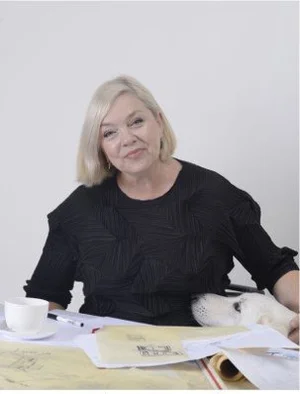
Christine McKanna-Farr is Founder and Creative Director of design milk studio and Boutique Builds, based in the Hunter Valley, NSW. Her international design experience spans hospitality, resort master planning, interiors and mixed-use developments, with projects and design studies extending from Kangaroo Valley, Australia, to Cherating, Malaysia.